Complete Passover 2027 Date Schedule
Quick answer: For anyone asking when is passover 2027, the holiday begins at sunset on Wednesday, April 21, 2027, with the first Seder held that evening. In the diaspora, Passover spans eight days from April 22 through April 29, while in Israel it is observed for seven days ending April 28. Plan holiday observances with our jewish holidays schedule.
Passover (Pesach) is one of the most prominent pilgrim festivals in the Jewish tradition, commemorating the liberation of the Israelites from ancient Egyptian slavery. Because Jewish days begin at sunset on the previous evening, all holiday rituals, candles, and family Seders begin at dusk before the calendar day. Preparing early ensures that homes are cleared of leavened grain products and festive meals are organized.
When searching for details on when is passover 2027, note that the festival takes place during late April. The full schedule of observances across the holiday period is outlined in the table below.
| Holiday Event / Observance | Hebrew Calendar Date | Civil Start (Sunset) | Main Day Date |
|---|---|---|---|
| Search for Chametz (Bedikat Chametz) | 13 Nisan 5787 | Tuesday, April 20, 2027 | Wednesday, April 21, 2027 |
| Passover Eve & First Seder | 14 Nisan 5787 | Wednesday, April 21, 2027 | Thursday, April 22, 2027 |
| Second Seder (Diaspora Only) | 15 Nisan 5787 | Thursday, April 22, 2027 | Friday, April 23, 2027 |
| Intermediate Days (Chol HaMoed) | 16-20 Nisan 5787 | Friday, April 23, 2027 | Sat Apr 24 – Tue Apr 27, 2027 |
| Seventh Day Pesach (Final Day in Israel) | 21 Nisan 5787 | Tuesday, April 27, 2027 | Wednesday, April 28, 2027 |
| Eighth Day Pesach (Final Day Diaspora) | 22 Nisan 5787 | Wednesday, April 28, 2027 | Thursday, April 29, 2027 |
Knowing these dates allows families to arrange work leave, purchase kosher-for-Passover provisions, and plan community gatherings smoothly across the spring holiday season.
Why Passover Lasts 8 Days in Diaspora and 7 Days in Israel
A notable distinction in Jewish calendar observance is that major biblically mandated festivals last one day longer outside the Land of Israel. In Israel, Passover is observed for seven days, beginning on 15 Nisan and concluding on 21 Nisan. Outside of Israel (in the diaspora), communities observe the festival for eight days, concluding on 22 Nisan.
This geographic difference originated in antiquity prior to the establishment of a fixed mathematical calendar. In biblical times, the new month was declared by the Sanhedrin court in Jerusalem based on eyewitness sightings of the new moon. Messengers were dispatched to notify distant Jewish communities throughout the Middle East and Mediterranean region.
Because travel took time, remote communities outside Israel often could not receive timely word regarding which day had been established as Rosh Chodesh. To ensure they did not accidentally violate sacred holiday laws, rabbinic authorities instituted a second festival day (Yom Tov Sheni) for diaspora communities. Although modern math allows exact date calculation, diaspora communities continue this tradition today. You can convert specific dates using our jewish date converter.
What Passover Commemorates: The Exodus Story
Passover commemorates the miraculous redemption of the Israelite people from slavery in Egypt under the leadership of Moses, as recounted in the biblical Book of Exodus. After centuries of harsh forced labor, God dispatched ten plagues upon Pharaoh and Egypt to secure their release.
The name “Passover” (Pesach in Hebrew) refers to the final tenth plague, during which the divine presence passed over the marked homes of the Israelites while smiting the Egyptian firstborn. Following this plague, Pharaoh released the Israelites, who departed Egypt so hurriedly that their bread dough had no time to rise, baking in the sun into unleavened flatbreads (matzah).
The festival is also termed Chag HaAviv (the Spring Festival), reflecting the biblical commandment to ensure that Passover always occurs in the spring season. The lunisolar Hebrew calendar accomplishes this seasonal alignment through periodic leap years.
Seder Basics, Matzah, and Removing Chametz
Observing Passover involves distinct dietary practices and meaningful evening family gatherings centered around storytelling and symbolic foods.
1. Removing Chametz (Leavened Grain)
Throughout the duration of Passover, eating, owning, or deriving benefit from chametz (leavened products derived from wheat, barley, spelt, rye, or oats) is strictly forbidden. Families conduct thorough home spring cleaning prior to the holiday, sell remaining chametz to non-Jewish neighbors via a rabbi, and perform a formal candlelight search for chametz (Bedikat Chametz) on the night before the first Seder.
2. The Passover Seder
On the first evening (and second evening in the diaspora), families gather around the table for the Seder, a structured ceremonial meal following fifteen traditional steps. Guided by the Haggadah text, participants retell the Exodus story, sing songs of praise, discuss ethical freedom, and enjoy symbolic foods.
3. The Ceremonial Seder Plate
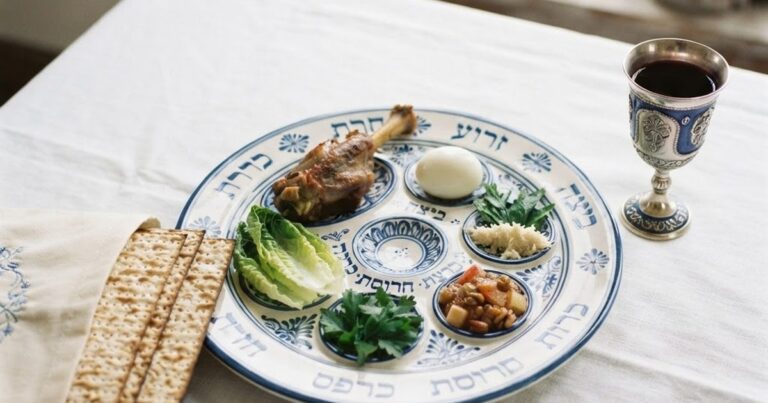
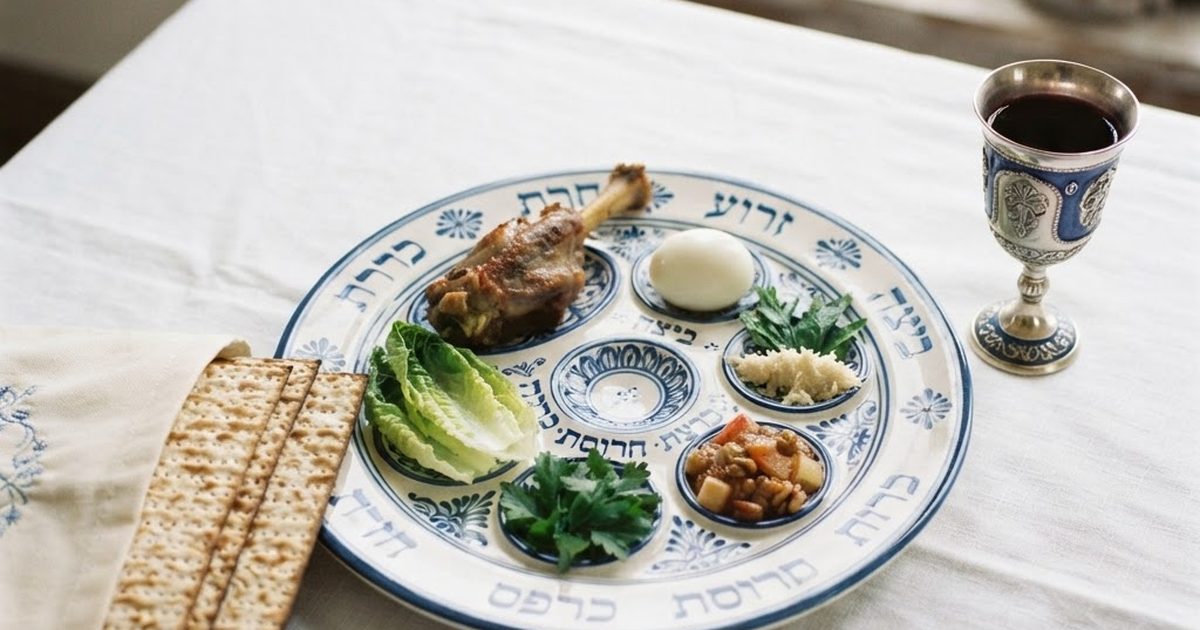
The centerpiece of the table is the Seder plate, containing six symbolic items:
- Matzah: Three stacked pieces of unleavened bread symbolizing both poor bread of affliction and quick redemption.
- Maror and Chazeret: Bitter herbs (horseradish or romaine lettuce) symbolizing the bitterness of Egyptian slavery.
- Charoset: A sweet mixture of apples, nuts, wine, and cinnamon representing the mortar used by Israelite slaves.
- Zeroa: A roasted bone or neck symbolizing the ancient Paschal lamb sacrifice in the Jerusalem Temple.
- Beitzah: A hard-boiled egg representing the holiday festival offering and the cycle of life.
- Karpas: A vegetable (parsley or potato) dipped in salt water to recall tears shed during bondage.
Counting the Omer and Spring Traditions
On the second night of Passover (Thursday evening, April 22, 2027), Jewish communities begin the daily ritual of Sefirat HaOmer (Counting the Omer). This 49-day verbal count connects the redemption from slavery at Passover with the spiritual receiving of the Torah at Sinai on Shavuot seven weeks later.
The intermediate days of Passover (Chol HaMoed) span from April 24 through April 27, 2027. During Chol HaMoed, work restrictions are eased, allowing family outings and visits while continuing to observe all dietary chametz restrictions.
The final days of Passover celebrate the splitting of the Red Sea. On the eighth day in the diaspora (April 29, 2027), memorial Yizkor prayers are recited in synagogue for deceased family members. You can learn more about how seasonal festivals fit into the broader calendar structure by reading our jewish calendar guide.
Frequently Asked Questions
What are the Four Questions asked at the Seder?
The Four Questions (Mah Nishtanah) are traditionally recited by the youngest child at the table. They ask why this night differs from all other nights regarding matzah, bitter herbs, dipping vegetables twice, and reclining at the meal.
What is the Afikoman and why is it hidden?
The Afikoman is a piece broken from the middle matzah during the early steps of the Seder. It is wrapped and hidden for children to find later in the evening, keeping them awake and engaged throughout the storytelling meal.
Are work activities allowed on the intermediate days of Passover?
Yes, necessary work and financial activities are permitted during Chol HaMoed (intermediate days), though heavy labor and unnecessary work are customarily avoided to maintain a festive holiday environment.
Why are four cups of wine drunk during the Seder?
The four cups of wine symbolize the four expressions of redemption promised by God in Exodus 6:6-7: bringing out, delivering, redeeming, and taking the Israelite people as a cherished nation.
The Bottom Line
Passover 2027 is a sacred time of freedom, family gathering, storytelling, and gratitude. Knowing that Passover begins on the evening of April 21, 2027, allows ample time to clean homes of chametz, secure matzah and kosher supplies, and invite family for annual Seders. Whether you are observing seven days in Israel or eight days in the diaspora, Pesach provides profound spiritual lessons about liberty and faith.
To plan upcoming holiday observances and view complete calendar schedules, explore our free jewish holidays directory today to access full holiday guides, converter tools, and interactive schedules.