- Understanding Yahrzeit in Jewish Tradition
- How to Find the Hebrew Date of Passing
- Key Yahrzeit Observances and Memorial Customs
- Reciting Kaddish and Saying Memorial Prayers
- How Leap Years and Adar Affect Yahrzeit Dates
- Cemetery Visits and Yizkor Remembrance Days
- Frequently Asked Questions
- The Bottom Line
Understanding Yahrzeit in Jewish Tradition
Quick answer: To learn how to find a yahrzeit date, convert the civil date and sunset time of a loved one’s passing into its corresponding Hebrew calendar date. The annual memorial is observed on that exact Hebrew date every year, beginning at sunset on the preceding evening with a 24-hour memorial candle, reciting Kaddish, and reflective prayers. Our free yahrzeit calculator calculates annual anniversary dates for the next decade automatically.
In Jewish tradition, preserving the memory of departed loved ones is a sacred duty filled with deep reverence and spiritual warmth. The Yiddish word yahrzeit translates directly to “a year’s time” and refers to the annual anniversary of a relative’s passing according to the Hebrew calendar. Honoring a yahrzeit provides families with a structured, annual opportunity to reflect on a loved one’s life, light a memorial flame, perform acts of charity, and recite prayers in their memory. For additional details on mourning customs, see our comprehensive yahrzeit guide.
Because the Hebrew calendar is lunisolar, the civil date of a yahrzeit changes every year on the Gregorian calendar. A yahrzeit date that falls in early November one civil year might fall in mid-October the following year. Understanding how to find a yahrzeit date ensures that family members can mark the exact Hebrew date each year without missing this meaningful memorial anniversary.
Furthermore, in Jewish law, every calendar day begins at sunset on the preceding evening rather than at midnight. Consequently, yahrzeit observances always commence at sunset on the night before the listed Hebrew date and continue throughout the following day until nightfall. Knowing this fundamental calendar rule prevents confusion and helps families prepare their homes in advance.
How to Find the Hebrew Date of Passing
Finding the correct Hebrew date of passing requires gathering three key facts: the civil calendar date of death, the location where the death occurred, and whether the passing took place before or after local sunset. If a loved one passed away before sunset, the Hebrew date corresponds directly to that civil day. If passing occurred after sunset, the Hebrew date is assigned to the next calendar day.
If official death certificates or family records list only the civil date without specifying the exact time of death, family members can check traditional headstones, funeral home records, or synagogue memorial registries. Headstones frequently record the exact Hebrew date using traditional Hebrew letters and numbers. If you need assistance converting civil dates into Hebrew dates, our free Jewish date converter converts any historical civil date based on sunset timing.
Once the initial Hebrew date of death is established, that specific Hebrew month and day remain the permanent anniversary date for all future annual observances. The table below illustrates how different factors influence yahrzeit timing across different scenarios:
| Factor | Impact on Yahrzeit Date | Hebrew Calendar Principle | Action to Take |
|---|---|---|---|
| Time of Death | Determines exact Hebrew date | Days begin at sunset, not midnight | Verify if passing occurred before or after sunset |
| Lunisolar Calendar Shift | Civil date shifts yearly by 11 to 30 days | 12 lunar months total 354 days | Calculate annual civil equivalent date in advance |
| Leap Year (Adar) | Adds Adar I during 13-month years | 7 leap years occur per 19-year cycle | Follow community custom for Adar deaths |
| Rosh Chodesh Passing | 29-day vs 30-day months vary | Some months alter length across years | Follow established rabbinic calendar rules |
Key Yahrzeit Observances and Memorial Customs
Observing a yahrzeit encompasses several gentle, traditional practices designed to honor the deceased and bring comfort to the living. The central visible symbol of yahrzeit is lighting a special 24-hour memorial candle, often called a Yahrzeit candle. The candle is lit at sunset on the eve of the yahrzeit and allowed to burn naturally until it extinguishes itself the following evening. You can learn more about lighting instructions in our dedicated article on the yahrzeit candle custom.
Traditionally, memorial candles are placed safely on a heat-resistant surface inside the home, such as a kitchen counter or dining sideboard. No specific formal blessing is required while lighting the candle, though many individuals take a quiet moment for personal reflection, silent meditation, or reading Psalms in memory of their loved one. Some families choose to share memories or recount personal stories about the deceased during dinner on the eve of the yahrzeit.
In addition to lighting candles, many people mark the yahrzeit by making charitable donations (tzedakah) in honor of the deceased, studying Torah passages, or serving light refreshments to community members after prayer services. These acts of lovingkindness are believed to bring spiritual merit to the soul of the departed and perpetuate their good deeds in the world.
Reciting Kaddish and Saying Memorial Prayers
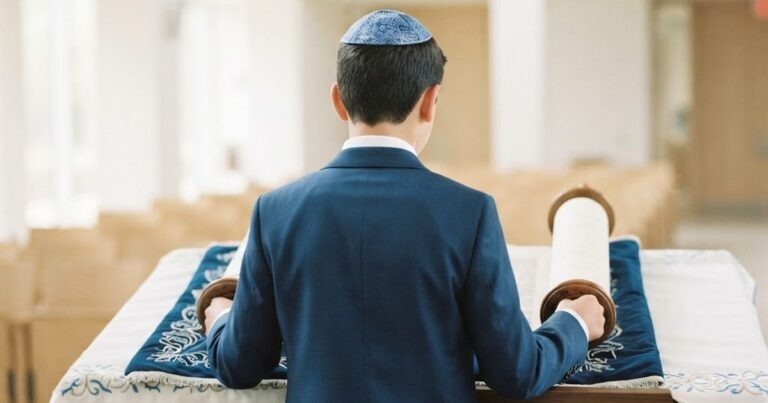
Reciting the Mourner’s Kaddish is one of the most sacred obligations associated with a yahrzeit. Kaddish is traditionally recited in a synagogue quorum (minyan) during daily morning, afternoon, and evening prayer services on the day of the yahrzeit. Contrary to common assumption, the text of Kaddish does not discuss death; rather, it is a magnificent prayer praising God’s greatness, sanctifying His name, and expressing an enduring hope for peace throughout the world.
Children observing a yahrzeit for a parent customarily recite Kaddish at every prayer service during the 24-hour period. It is also customary for an observer to receive an aliyah (being called up to the Torah reading) on the Shabbat preceding or coinciding with the yahrzeit. Leading synagogue prayers or chanting the Haftarah reading on that Shabbat are additional ways mourners honor their loved ones.
For individuals who are unable to attend a synagogue service or who live far from a congregational minyan, reciting personal memorial prayers, reading selections from the Book of Psalms (Tehillim), and reflecting on the moral legacy of the deceased remain meaningful ways to observe the day respectfully. Many prayer books contain specific personal meditations for yahrzeit when a minyan is unavailable.
How Leap Years and Adar Affect Yahrzeit Dates
Understanding how to find a yahrzeit date requires special attention when a death occurred during the month of Adar, or when an annual observance falls within a Hebrew leap year. In regular years, the Hebrew calendar has twelve months, including a single month of Adar. However, in leap years such as year 5787, an extra month called Adar I is added, and the regular Adar becomes Adar II.
If a person passed away during a regular year in Adar, traditions vary across communities regarding when to observe the yahrzeit during a 13-month leap year. In many Ashkenazic communities, the custom is to observe the yahrzeit during Adar I, while some observe it in Adar II or even on both dates. In Sephardic communities, the prevalent custom is to observe the yahrzeit during Adar II. To read more about how leap years work on the Jewish calendar, consult our guide on Adar I and Adar II in 5787.
If the passing originally took place during Adar I of a leap year, the annual yahrzeit during subsequent leap years is observed in Adar I. If passing occurred in Adar II during a leap year, it is observed in Adar II in leap years, and during the single Adar in regular 12-month years. Families are encouraged to follow their family tradition or consult their congregational rabbi for personal guidance on complex leap year calculations.
Cemetery Visits and Yizkor Remembrance Days
Visiting the final resting place of a loved one is another meaningful yahrzeit tradition that connects past and present generations. Many family members visit the cemetery on or shortly before the anniversary of death. During a cemetery visit, it is customary to recite Psalms at the graveside and place a small pebble or stone on top of the headstone. Placing a stone serves as an enduring sign that family members have visited, remembered, and honored the deceased.
It is important to note that graveside visits are customarily avoided on Shabbat, major biblical holidays, and Rosh Chodesh, as these are joyful days on the Jewish calendar. If a yahrzeit falls on Shabbat, family members typically visit the cemetery on Friday afternoon or Sunday following the anniversary.
In addition to individual yahrzeit anniversaries, communal memorial prayers known as Yizkor are recited four times each year during synagogue services in the diaspora: on Yom Kippur, Shemini Atzeret, the final day of Passover, and the second day of Shavuot. Yizkor allows the entire community to join together in remembering parents, spouses, children, siblings, and relatives who have passed away.
Frequently Asked Questions
What if I do not know the exact time of death?
If the exact time of death is unknown, families customarily assume the death occurred before sunset on the civil date. If family or synagogue tradition has already established a specific Hebrew day for the yahrzeit, continue observing that established date consistently every year.
When should the yahrzeit candle be lit?
The yahrzeit candle should be lit at sunset on the evening before the Hebrew yahrzeit date. The flame is left to burn continuously for 24 hours until it burns out naturally the following evening.
Can multiple family members light individual memorial candles?
Yes, each household or family member may light their own memorial candle in their respective homes. Lighting individual candles allows every family member to participate directly in honoring the loved one’s memory regardless of location.
Is a fast observed on a yahrzeit?
Traditionally, some individuals chose to fast on the yahrzeit of a parent from sunrise to sunset. However, in modern times, many communities encourage performing acts of charity, studying Torah, and sharing communal meals instead of fasting.
The Bottom Line
Knowing how to find a yahrzeit date ensures that you can fulfill this sacred tradition with peace of mind every year. By identifying the Hebrew date of passing, lighting a 24-hour memorial candle at sunset, and participating in prayer and charity, you create a beautiful tribute that honors your loved one’s enduring legacy.
To quickly look up exact yahrzeit dates for coming years without manual conversion, try our free yahrzeit calculator tool. It automatically generates a full ten-year schedule of civil yahrzeit dates and candle-lighting times for your family.