- What Is a Hebrew Birthday and Why Is It Significant?
- Why Your Hebrew Birthday Date Changes on the Civil Calendar
- Step-by-Step Guide to Finding Your Hebrew Birthday
- How Hebrew Birthdays Work in Leap Years
- Major Jewish Birthday Milestones in Tradition
- Meaningful Ways to Celebrate Your Hebrew Birthday
- Frequently Asked Questions
What Is a Hebrew Birthday and Why Is It Significant?
Quick answer: Finding your hebrew birthday requires converting your civil birth date and time into the Jewish lunisolar calendar. Because Jewish days begin at sunset, anyone born after sunset is recorded on the subsequent Hebrew calendar day. You can easily determine your exact date using our free jewish birthday calculator to discover when your special anniversary occurs every year.
In Jewish tradition, a person’s birth date is far more than a simple marker on the annual wall calendar. Your hebrew birthday represents the exact spiritual moment when your soul entered the physical world. According to Jewish spiritual thought, the specific Hebrew month and day on which you were born carry unique heavenly energies and personal spiritual potential. Reaching that date each year offers a personal new year, a moment for introspection, gratitude, and renewed spiritual focus.
Unlike the modern civil solar calendar, the Hebrew calendar is a lunisolar system. This means that months follow the phases of the moon, while the total length of the year is periodically adjusted to remain in harmony with the solar seasons. Because of this structure, your Hebrew birthday corresponds to a shifting date on the Gregorian calendar each year. Understanding this connection allows you to observe your birth anniversary according to time-honored Jewish heritage.
Every Jewish date begins in the evening at sunset, rather than at midnight. This fundamental principle comes directly from the creation account in Genesis, which states that evening and morning comprised the first day. Consequently, knowing the exact time of day you were born, specifically whether your birth took place before or after sunset, is critical when determining your authentic Hebrew birth date.
Why Your Hebrew Birthday Date Changes on the Civil Calendar
Many people notice that their Hebrew birthday appears on a completely different day on the civil calendar every single year. The primary reason for this annual shift is the mathematical difference between lunar and solar cycles. A regular Hebrew year consists of 12 lunar months, totalizing approximately 354 days. In contrast, the standard solar year spans roughly 365 days. This leaves an 11-day gap between the two calendar systems annually.
Because the lunar calendar is 11 days shorter than the solar year, your Hebrew birth anniversary will generally occur about 11 days earlier on the civil calendar during the following year. To prevent the spring and autumn holidays from drifting out of their biblical seasons, the Hebrew calendar inserts a full 30-day leap month (known as Adar I) seven times in every 19-year cycle. Following a leap year, your Hebrew birth date will appear roughly 19 days later on the Gregorian calendar.
The table below illustrates how a single fixed Hebrew birth date, such as 1 Nisan, shifts across consecutive civil years on the modern solar calendar.
| Hebrew Calendar Date | Hebrew Year | Corresponding Civil Date | Year Type |
|---|---|---|---|
| 1 Nisan | 5785 | March 30, 2025 | Regular Year (12 Months) |
| 1 Nisan | 5786 | March 19, 2026 | Regular Year (12 Months) |
| 1 Nisan | 5787 | April 8, 2027 | Leap Year (13 Months) |
| 1 Nisan | 5788 | March 28, 2028 | Regular Year (12 Months) |
As shown in the table, the civil date moves earlier during regular years and jumps later following a leap year. Despite these civil date fluctuations, your Hebrew anniversary remains completely stable within the sacred Jewish calendar cycle.
Step-by-Step Guide to Finding Your Hebrew Birthday
Calculating your authentic Hebrew birth date is a straightforward process when you follow a structured approach. Here is how you can find your exact date in four simple steps.
Step 1: Collect Your Exact Birth Information
To begin, gather your precise civil birth details. You will need your exact civil date of birth (month, day, and year), the location of your birth, and the exact local time recorded on your birth certificate or family record.
Step 2: Determine Sunset at Your Birth Location
Because a Jewish day begins at sunset, you must check whether you were born before or after sunset on that date. If your birth occurred after sunset, your Hebrew birth date is counted on the following civil calendar day. For example, if you were born at 8:30 PM on a day when sunset occurred at 7:15 PM, your Hebrew date corresponds to the next civil day.
Step 3: Convert Your Date Using an Online Tool
Once you have established whether your birth took place before or after sunset, convert your civil birth information using a reliable converter tool. You can instantly look up your date with our comprehensive jewish date converter. This tool automatically accounts for historic sunset times, leap years, and calendar adjustments.
Step 4: Record Your Hebrew Month, Day, and Year
After converting your birth details, write down your full Hebrew date. A complete Hebrew birth record includes the day of the month, the name of the Hebrew month, and the Hebrew year counting from creation (for example, 15 Elul 5745). Keep this record handy so you can easily verify your upcoming annual birth celebrations.
How Hebrew Birthdays Work in Leap Years
Leap years in the Jewish calendar present a unique scenario for individuals born during the winter month of Adar. A standard Hebrew year contains a single month named Adar. However, during a 13-month leap year, the calendar incorporates two distinct months: Adar I (Adar Aleph) and Adar II (Adar Bet). Year 5787, which began on Rosh Hashanah in September 2026, is a designated leap year containing both Adar I and Adar II.
If you were born during a regular non-leap year in the month of Adar, how do you celebrate your birthday during a leap year? According to widespread traditional custom, individuals born in Adar during a standard year observe their birthday during Adar II in leap years. This is because Adar II is considered the primary Adar for major observances, including Purim.
Conversely, if you were born during a leap year specifically in Adar I or Adar II, your birthday in future leap years is observed in that exact same month. During non-leap years, all Adar births are celebrated in the single month of Adar. Some communities follow nuanced traditional customs regarding Adar observances, so individuals seeking personal guidance often consult their family tradition or local rabbi.
Major Jewish Birthday Milestones in Tradition
While every annual Hebrew birthday is meaningful, Jewish tradition places elevated importance on specific age milestones. These milestones mark significant shifts in communal responsibility, spiritual adulthood, and personal maturity.
- Age 12 (Girls): A Jewish girl reaches the age of Bat Mitzvah on her 12th Hebrew birthday, becoming fully responsible for fulfilling communal commandments and ethical duties.
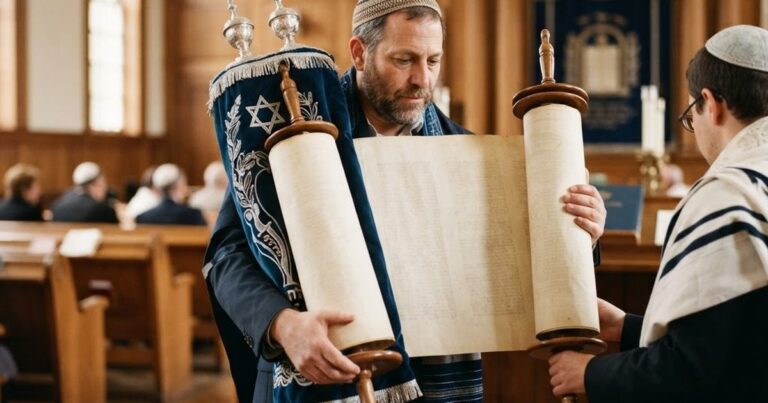
- Age 13 (Boys): A Jewish boy reaches the age of Bar Mitzvah on his 13th Hebrew birthday, marking his official transition into religious adulthood.
- Age 20: Historically, age 20 represented the milestone for communal leadership, full military service eligibility in ancient Israel, and complete personal independence.
- Age 60: Reaching age 60 is traditionally associated with entering a period of elder wisdom and special spiritual merit.
- Age 70 and 80: Psalm 90 refers to 70 years as a full lifespan, while reaching 80 reflects special strength and divine blessing.
You can learn more about preparing for youth milestones by reading our detailed jewish birthday guide. Calculating the exact Hebrew date ensures that family milestone celebrations take place on the proper traditional anniversary.
Meaningful Ways to Celebrate Your Hebrew Birthday
Celebrating your Hebrew birth anniversary involves uplifting activities designed to harness the spiritual potential of the day. Unlike typical social parties, a Hebrew birthday emphasizes spiritual growth, gratitude, and community contributions.
A central custom on your Hebrew birthday is giving extra charity (tzedakah) to support those in need. Increasing acts of kindness on your special day creates a positive spiritual impact for the coming year. Many people also make a point of reciting the specific Psalm corresponding to their new age plus one (for instance, reciting Psalm 31 upon turning 30 years old).
Another cherished practice is taking on a new good deed or spiritual commitment for the upcoming year. Whether dedicating extra time to community service, learning new texts, or improving personal relationships, a birthday resolution provides personal focus. Families also gather to share a celebratory meal, exchange blessings, and wish the celebrant “yom huledet sameach,” which means happy birthday in Hebrew.
Frequently Asked Questions
What if I do not know the exact time of day I was born?
If you do not know whether you were born before or after sunset, check official birth records or family memory. If the exact hour remains unavailable, common practice is to calculate the date assuming birth occurred during daytime hours before sunset, though consulting a local rabbi can help clarify doubts.
Does my Hebrew birthday ever coincide with my civil birthday?
Yes, your Hebrew birthday will occasionally align with your Gregorian civil birth date. Because of the 19-year Metonic cycle, both calendar dates frequently coincide every 19 years, such as on your 19th, 38th, 57th, or 76th birthdays.
Is a Bar or Bat Mitzvah celebrated on the civil or Hebrew birthday?
Bar and Bat Mitzvah status is attained strictly according to the Hebrew calendar on the child’s 13th or 12th Hebrew birthday. Synagogue honors and family celebrations are scheduled based on that specific Hebrew date and the subsequent Shabbat.
Why do people give blessings on their Hebrew birthday?
Traditional sources teach that a person’s personal spiritual power is heightened on their Hebrew birthday. Therefore, it is customary for the birthday celebrant to offer sincere blessings of good health, happiness, and peace to family members and friends.
The Bottom Line
Finding and observing your Hebrew birth anniversary connects you directly with centuries of rich Jewish heritage and spiritual wisdom. By identifying your exact Hebrew month and day, you gain access to a personal day of reflection, celebration, and spiritual renewal each year. Whether you are planning a major life milestone like a Bar or Bat Mitzvah or simply wishing to celebrate your birth anniversary meaningfully, knowing your correct Hebrew date is essential.
Ready to calculate your anniversary? Use our free jewish birthday calculator today to uncover your Hebrew birth date, explore upcoming anniversary schedules, and plan meaningful celebrations with your loved ones.