- When Does Shabbat End? Nightfall and Star Sightings
- How Havdalah Nightfall Times Are Calculated
- The Four Essential Items Needed for Havdalah
- Step-by-Step Order of the Havdalah Ceremony
- Why Shabbat End Times Change Every Single Week
- Post-Havdalah Customs and Melaveh Malkah
- Frequently Asked Questions
- The Bottom Line
When Does Shabbat End? Nightfall and Star Sightings
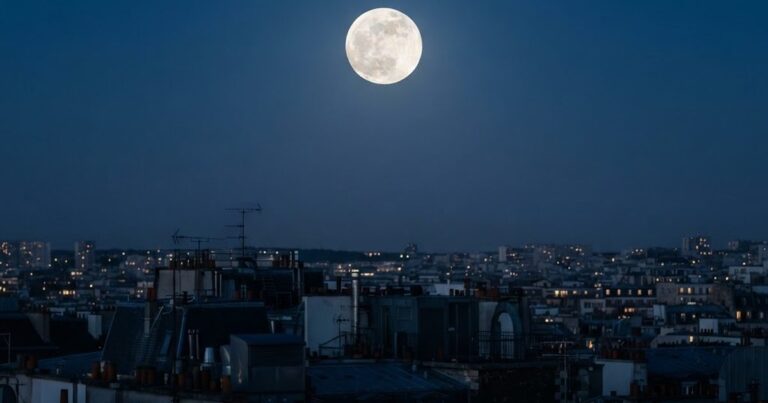
Quick answer: If you want to know when does Shabbat end, the Sabbath officially concludes at nightfall on Saturday evening when three medium-sized stars become visible in the sky. Depending on your location and traditional custom, this nightfall threshold falls between 42 and 72 minutes after local sunset.
Determining when does Shabbat end each week requires looking past sunset to the astronomical arrival of nightfall on Saturday evening. While the Sabbath begins on Friday evening 18 minutes before sunset, it concludes only when full darkness covers the sky, an astronomical moment known in Jewish law as Tzeit HaKochavim (the emergence of stars).
According to traditional halachic criteria, nightfall is defined as the moment when three medium-sized, closely clustered stars become visible to the naked eye. Because city lights and atmospheric haze often make direct star sighting difficult, modern Jewish communities rely on precise astronomical calculations based on solar elevation angles below the horizon.
Until nightfall officially arrives and the Havdalah ceremony is recited, Sabbath prohibitions against working, driving, cooking, or operating electric devices remain in full force. Transitioning mindfully from the sacred rest of the Sabbath into the secular workweek creates a structured spiritual bridge, honoring the departing Sabbath day with dignity and reverence.
For a detailed breakdown of Sabbath laws, Friday table rituals, and synagogue prayers, consult our comprehensive Shabbat guide, which serves as a foundational resource for observers worldwide.
How Havdalah Nightfall Times Are Calculated
Astronomical calculations for when Shabbat ends vary depending on geographical latitude, seasonal solar angles, and rabbinic opinions followed by different communities. While all authorities agree that nightfall requires true darkness, opinions differ on the exact solar angle that constitutes nightfall.
Common rabbinic benchmarks for calculating Havdalah nightfall include:
- Standard Fixed Minutes (42 to 50 Minutes): Many communities in North America and Western Europe calculate nightfall as a fixed interval after sunset, typically 42, 45, or 50 minutes, representing the average time required for stars to emerge at mid-latitudes.
- Astronomical Solar Angles (6.0 to 8.5 Degrees): Many calendars calculate nightfall when the sun descends between 6.0 and 8.5 degrees below the horizon, adjusting dynamically for seasonal twilight speed.
- Rabbeinu Tam Custom (72 Minutes): Following the medieval opinion of Rabbeinu Tam, certain Hasidic and strictly Orthodox communities wait 72 minutes after sunset year-round before ending Shabbat, ensuring an extra margin of certainty.
Because these calculation methods vary between synagogues and digital calendars, knowing which standard your local community follows ensures consistency. To check exact weekly end times calculated for your city, use our free calculator for precise times.
The Four Essential Items Needed for Havdalah
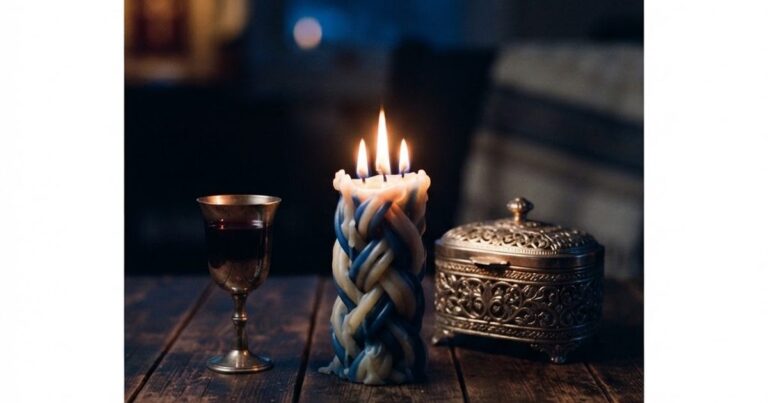
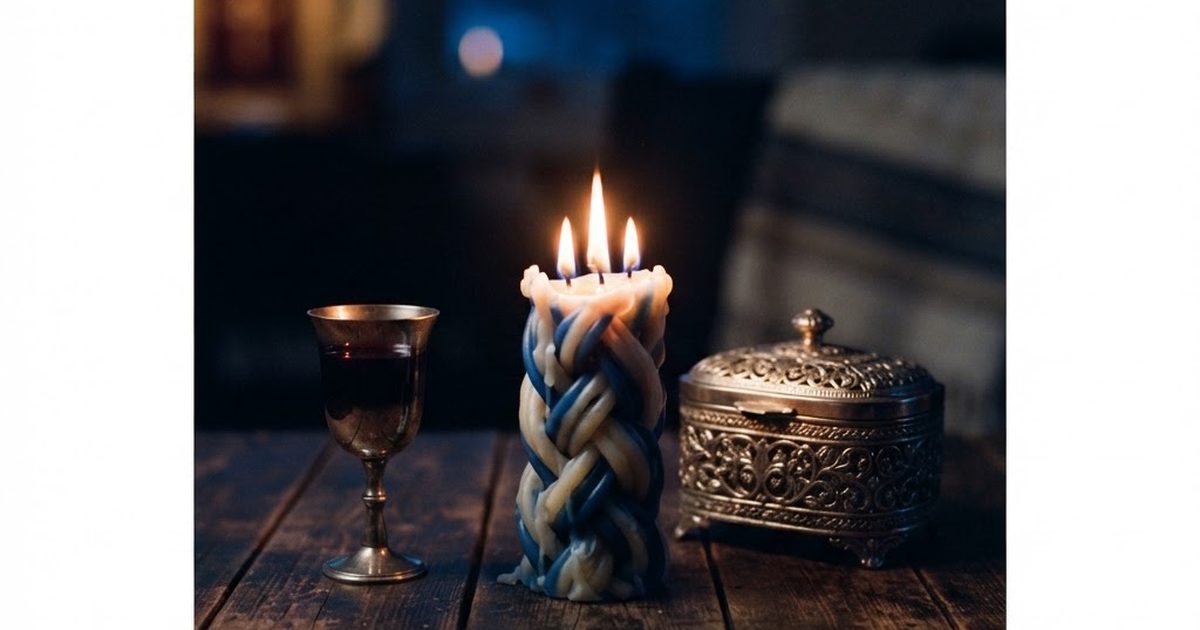
Havdalah, which translates from Hebrew as “separation” or “distinction,” is a brief home ceremony that marks the division between the holy Sabbath and the six secular days of the workweek. The ceremony engages all five human senses through four specific ritual objects.
| Ritual Item | Hebrew Term | Symbolic Purpose & Meaning | Customary Material Used |
|---|---|---|---|
| Cup of Wine or Juice | Kos HaYayin | Sanctifies the moment with joy; filled until overflowing as a sign of abundance. | Kiddush cup filled with kosher wine or sweet grape juice. |
| Aromatic Spices | Besamim | Revives the soul as the extra Sabbath soul (Neshamah Yeterah) departs at nightfall. | Cloves, sweet cinnamon, or myrtle kept in a decorative silver spice box. |
| Braided Multi-Wick Candle | Ner Havdalah | Commemorates the creation of fire by Adam on Saturday night at the end of Creation week. | Braided candle with two or more wicks woven together in blue, white, or beeswax. |
| Spill Tray or Plate | K’arot Havdalah | Catches overflowing wine and provides a safe basin to extinguish the candle flame. | Ceramic, glass, or silver plate placed under the kiddush cup. |
Gathering family and guests around the table for Havdalah provides a serene focal point as Saturday evening begins, bringing children and adults together to sing introductory verses and smell fragrant cloves or sweet spices.
Step-by-Step Order of the Havdalah Ceremony
The Havdalah ceremony follows a fixed, memorable order. The acronym YaKNHaZ (Yayin, Besamim, Ner, Havdalah) helps observers remember the sequence of blessings during the service.
Here is the step-by-step progression of the home ceremony:
- 1. Introductory Verses: The leader holds the overflowing wine cup and recites introductory biblical verses expressing trust in Divine protection and thanksgiving for salvation (such as “Hinei El Yeshuati”).
- 2. Blessing over Wine (Borei Peri HaGafen): The leader recites the blessing over the wine or grape juice while lifting the cup high for all to see.
- 3. Blessing over Spices (Borei Minei Besamim): The leader recites the blessing over fragrant spices, smells them, and passes the spice box around so every participant can inhale the sweet scent.
- 4. Blessing over Fire (Borei Me’orei HaEsh): The braided candle is held aloft. The leader recites the blessing over fire, and participants hold their hands up to the flame, inspecting their fingernails to reflect and enjoy the light.
- 5. The Havdalah Separation Blessing (HaMavdil): The leader holds the wine cup again and recites the main Havdalah prayer, thanking the Creator for separating between the holy and the mundane, light and darkness, Israel and the nations, and Shabbat and the six days of work.
- 6. Drinking Wine and Extinguishing Candle: The leader drinks the wine, pouring a few drops into the spill tray to extinguish the braided candle flame, causing it to sizzle pleasantly in the wine.
Learning the sequence of blessings is straightforward, and singing traditional songs like Eliyahu HaNavi or Shavua Tov immediately afterward sets an uplifting tone for the coming week.
Why Shabbat End Times Change Every Single Week
Just as Friday candle lighting times shift continuously throughout the year, Saturday night Havdalah times shift every week. Because sunset and twilight angles change daily as the Earth progresses along its solar orbit, nightfall moves earlier or later on the civil clock.
During winter months in the Northern Hemisphere, sunset arrives early, causing Shabbat to conclude in the late afternoon or early evening (often between 5:15 PM and 5:45 PM). In summer months, long daylight hours delay sunset and extend twilight, pushing Havdalah late into the evening (sometimes past 9:00 PM or 9:30 PM in northern latitudes).
Understanding how seasonal angles influence start and end times highlights the harmony between the Jewish calendar and astronomical realities. For a detailed comparison of Friday start times and sunset dynamics, read our guide on what time does Shabbat start, or review our analysis of why candles are lit 18 minutes before sunset.
Post-Havdalah Customs and Melaveh Malkah
Following the conclusion of Havdalah, traditional practices prolong the joyful spirit of the Sabbath into Saturday evening through music, storytelling, and a post-Sabbath meal.
Many families participate in Melaveh Malkah, meaning “Escorting the Queen.” This festive Saturday night meal honors the departing Sabbath Queen with bread, warm food, and cheerful songs. According to tradition, eating a meal after Havdalah demonstrates reluctance to bid farewell to the holy day, extending its warmth and spiritual blessing into the workweek.
Wishing friends and family “Shavua Tov” (a good week) or “A guten voch” in Yiddish represents a universal post-Havdalah custom, spreading blessing and goodwill before weekday responsibilities resume on Sunday morning.
Frequently Asked Questions
Can Havdalah be recited without wine?
Yes, sweet grape juice or other respected beverages like beer, tea, or coffee can be used if wine is unavailable.
Why do we look at our fingernails during Havdalah?
Looking at fingernails allows observers to derive physical benefit from the candle light and see the contrast of shadow and light.
What if you do not have spices or a braided candle?
If spices or a braided candle are unavailable, Havdalah can still be recited over wine or juice, skipping missing blessings.
Can you work before Havdalah if nightfall has passed?
If nightfall has passed but you have not yet recited Havdalah, you must say a short verbal separation formula (Baruch HaMavdil) before working.
The Bottom Line
Knowing when does Shabbat end empowers you to transition smoothly from Sabbath serenity into workweek productivity. By calculating nightfall accurately and celebrating Havdalah, you honor the day of rest from start to finish.
To check exact Havdalah and candle lighting times for your location this week, visit our free Shabbat candle lighting times calculator and plan your weekend schedule with accuracy.